
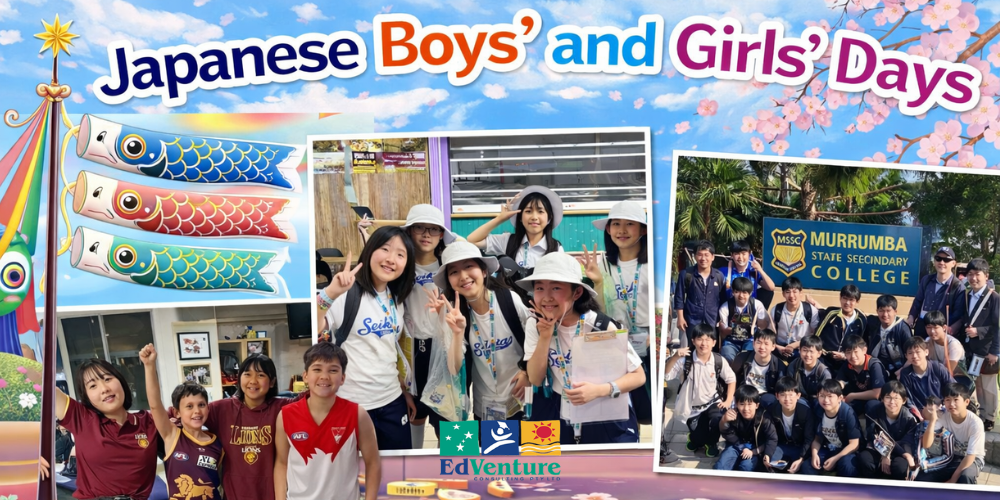
Japan has two beautiful traditions dedicated to celebrating children — Girls’ Day and Boys’ Day. These special occasions are not only meaningful for families but are also filled with colourful decorations, unique foods, and heartfelt wishes for children’s happiness and growth.
Let’s take a closer look at how these days are celebrated across Japan.
Girls’ Day (Hinamatsuri) – March 3
Hinamatsuri, also known as Girls’ Day, is celebrated on March 3rd each year. This day is dedicated to wishing girls good health, happiness, and a bright future.
Traditions
The most iconic part of Girls’ Day is the display of hina dolls. Families set up a tiered platform covered in red cloth and decorate it with ornamental dolls representing the Emperor, Empress, and members of the royal court.
These dolls are often passed down through generations and are treated with great care. Traditionally, families take them down soon after March 3rd, as it is said that leaving them out too long may delay a daughter’s marriage — a fun cultural superstition!
Food
Girls’ Day is also known for its beautiful and symbolic foods:
- Hishimochi – a three-coloured rice cake (pink, white, and green), representing health, purity, and growth
- Chirashizushi – a colourful sushi dish topped with various ingredients
- Hina-arare – bite-sized snacks often enjoyed by children
Families may also drink sweet rice wine called shirozake to celebrate the occasion.
Boys’ Day (Children’s Day) – May 5
Children’s Day, originally known as Boys’ Day, is now officially called Children’s Day in Japan. While it celebrates all children, it still has strong traditions focused on boys’ health, strength, and success.
Traditions
One of the most recognisable symbols is the koinobori (carp streamers). Families fly these colourful carp-shaped flags outside their homes, with each fish representing a family member.
The carp is a symbol of strength and perseverance, inspired by a legend of a carp swimming upstream and transforming into a dragon — a powerful message for children to grow strong and overcome challenges.
Inside the home, families may display samurai helmets (kabuto) or warrior dolls to represent bravery and protection.
Food
Traditional foods for this day are just as meaningful:
- Kashiwa mochi – a rice cake filled with sweet bean paste and wrapped in an oak leaf, symbolising family continuity
- Chimaki – sweet rice dumplings wrapped in bamboo leaves
A Celebration of Growth and Love
Both Girls’ Day and Boys’ Day reflect how deeply Japanese culture values family, tradition, and the well-being of children. While the decorations and foods may differ, the message is the same — wishing for children to grow up healthy, happy, and strong.
Whether it’s admiring elegant hina dolls or watching colourful carp streamers dance in the wind, these celebrations are a beautiful reminder of the joy children bring to our lives.